


SANTOKU KNIVES
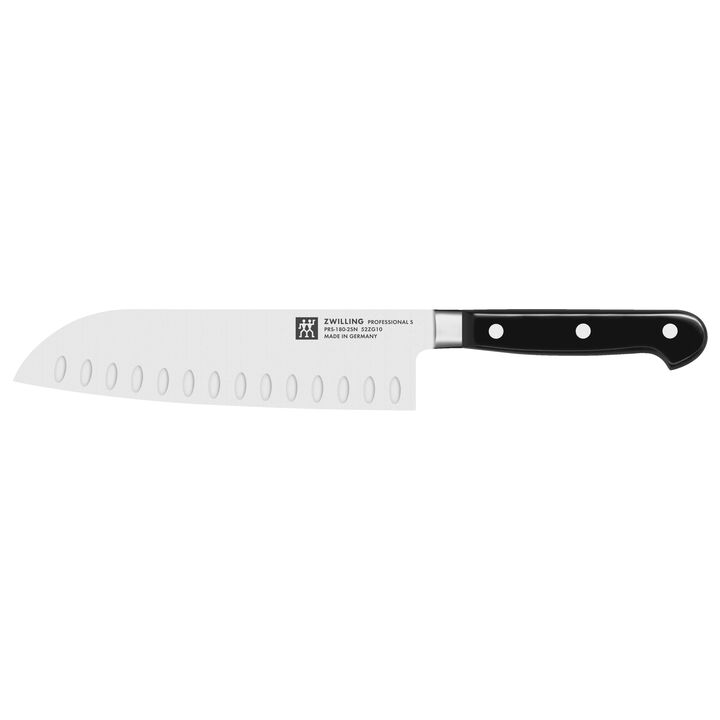
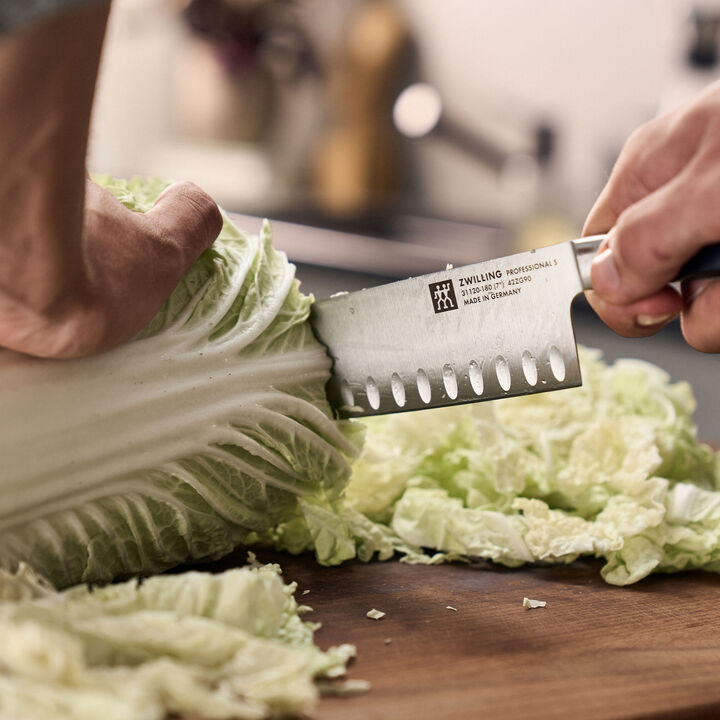
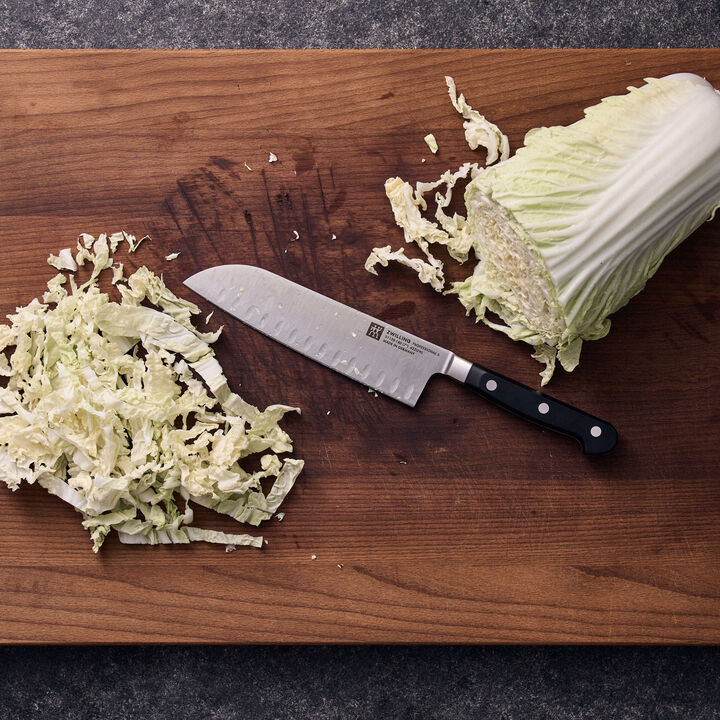
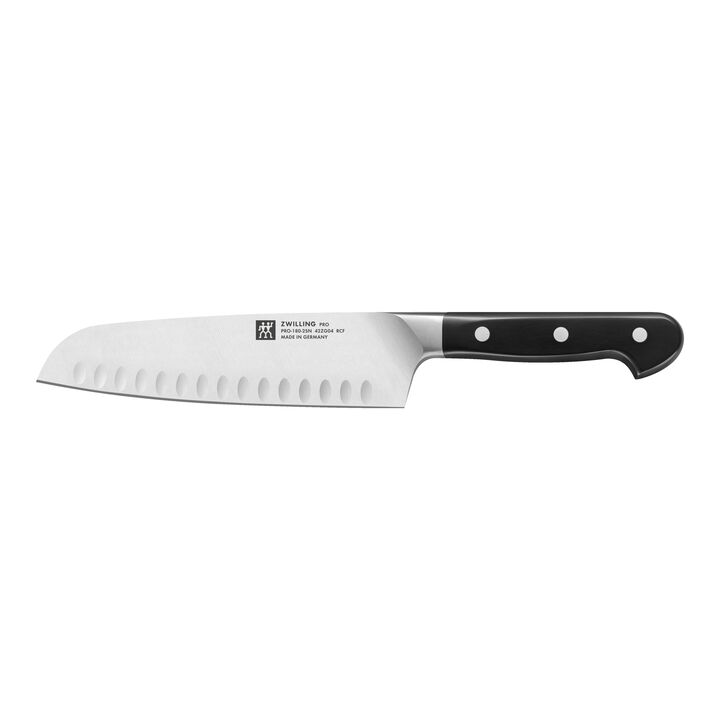
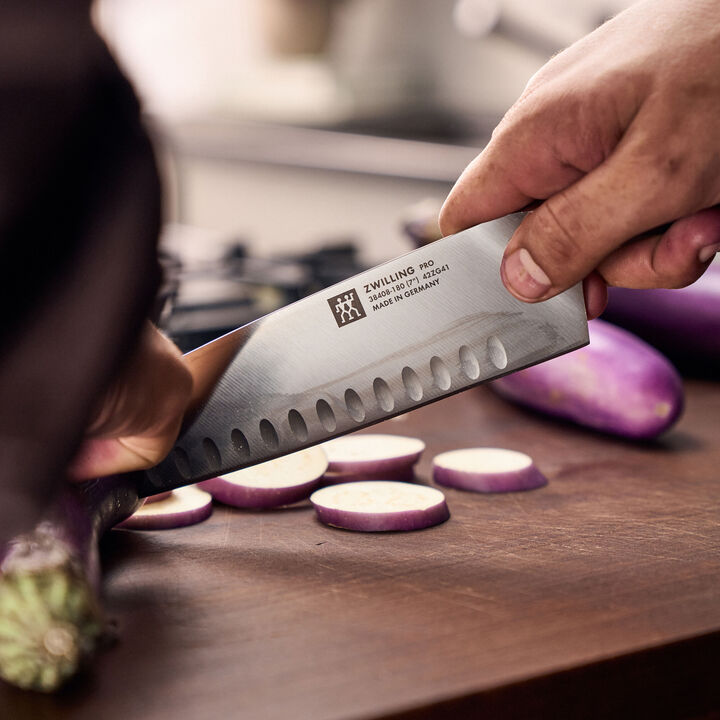
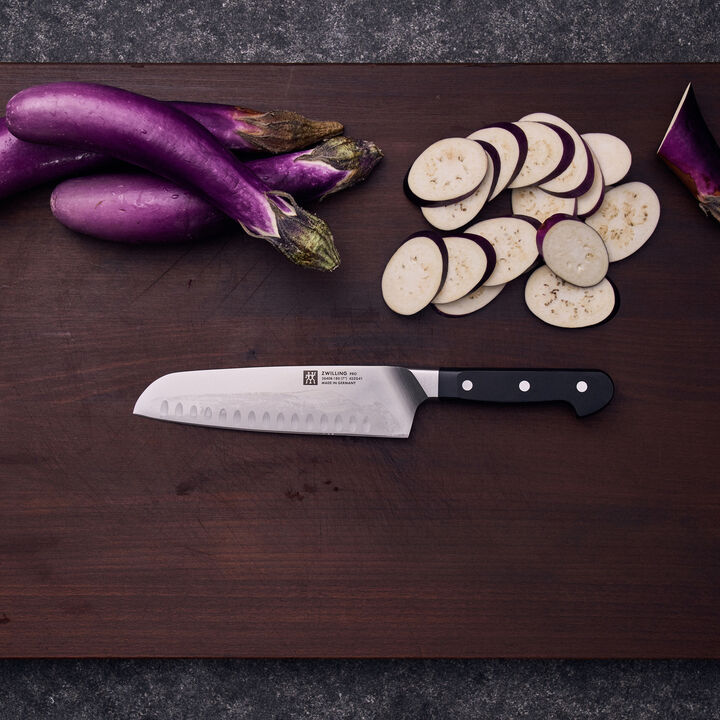
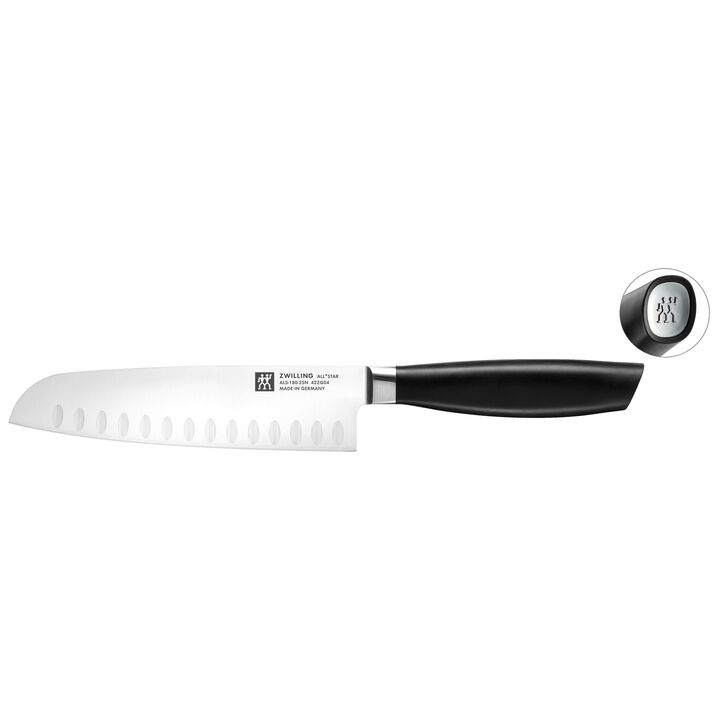
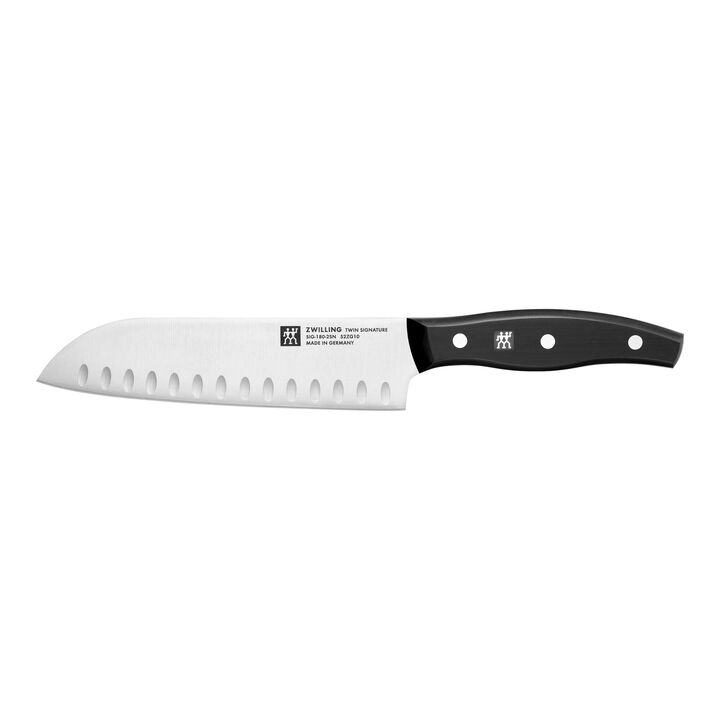
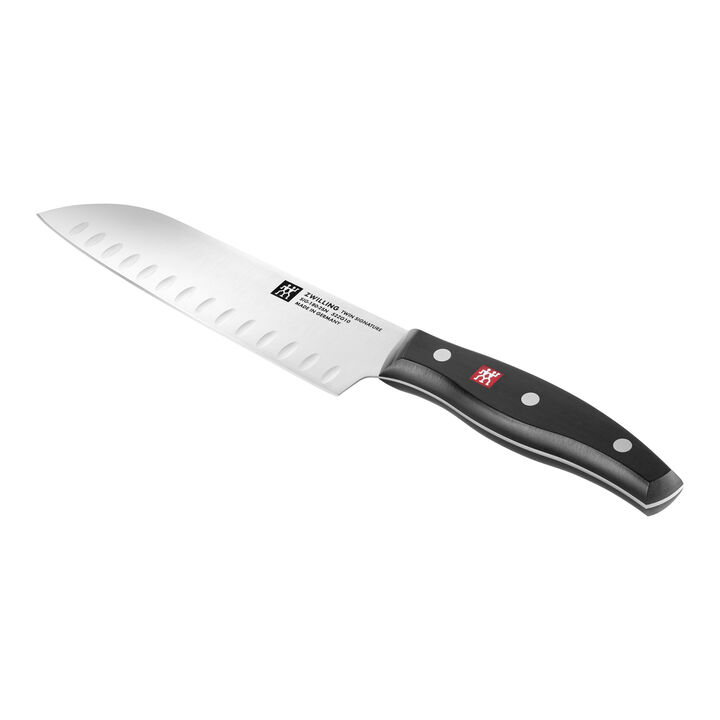
The Santoku knife is the Japanese equivalent of a chef's knife, renowned for its versatility and precision in the kitchen. Designed to excel at slicing, dicing, and mincing, this all-purpose knife is perfectly suited for preparing fish, meat, and vegetables with ease and efficiency. Its unique blade shape, often featuring a straighter edge and a granton edge to reduce sticking, allows for clean, precise cuts using a single downward cut or push-cutting motion, making it a favorite among both professional chefs and home cooks alike.
Santoku knives typically feature thinner steel blades compared to traditional Western knives, offering a sharper cutting edge and lighter weight that reduces hand fatigue during use. Whether you prefer a 7 inch santoku knife for its balance and control or a rocking santoku style for versatile chopping, the Santoku is an extremely versatile tool that belongs in every knife set and is well-suited for small hands and precision tasks on a cutting board.
FILTER BY HANDLE DESIGN













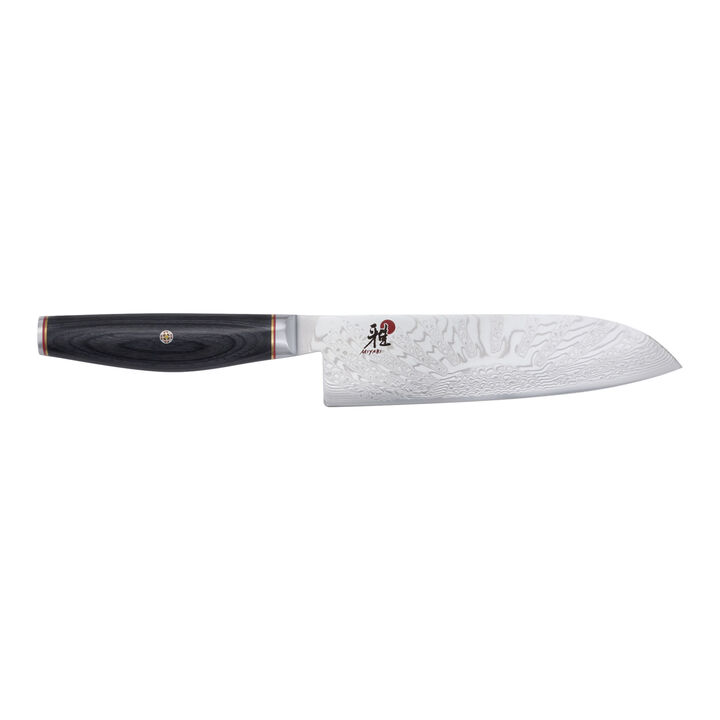
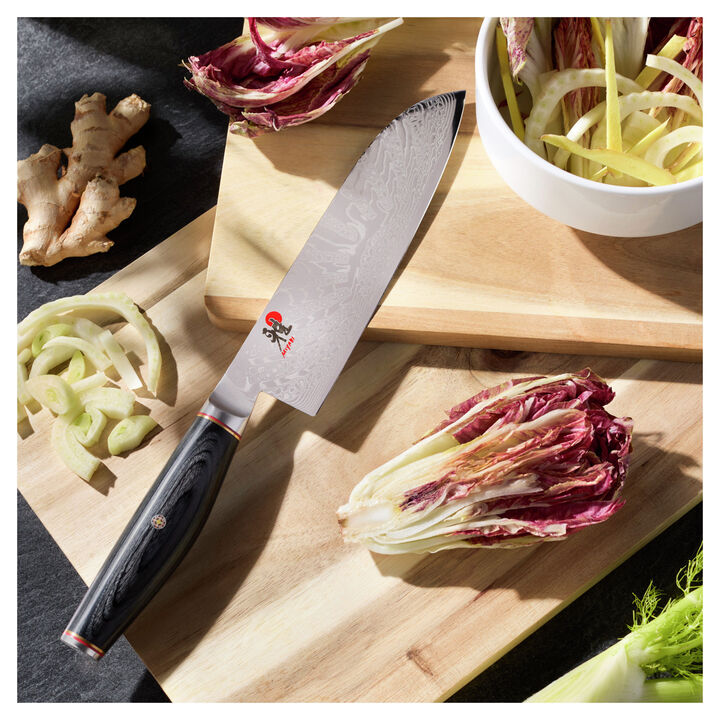
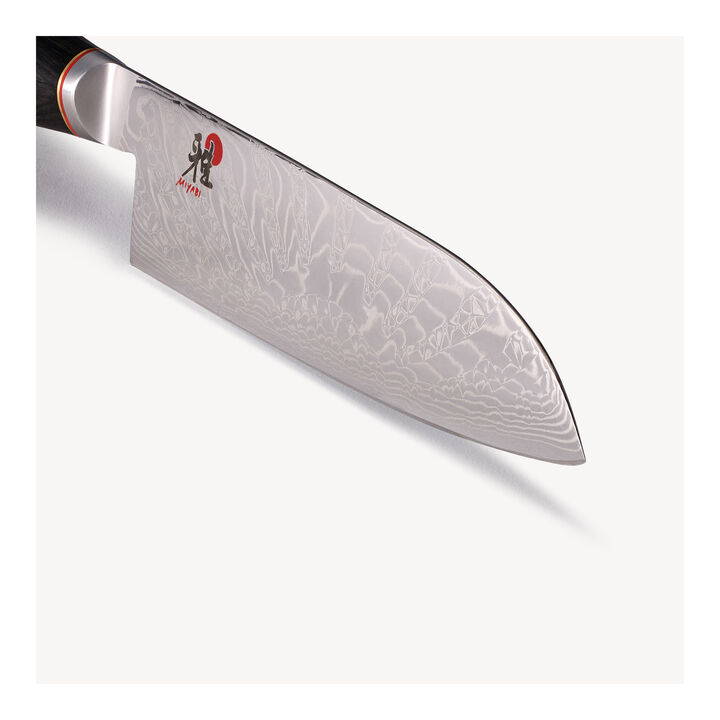


Santoku Chef's Knives
Santoku knife - virtues of the Japanese blade in the kitchen
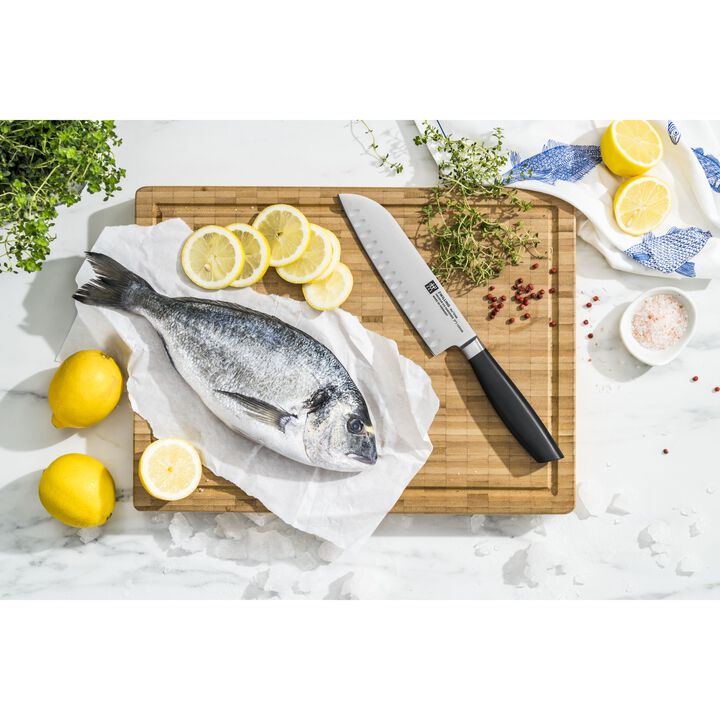
"Knife of the three virtues" - there is no more poetic and apt description of the all-purpose knife from the Far East. Meat, fish, or vegetables: all no problems for the Japanese blade miracle, which should not be missing in any well-equipped kitchen. At ZWILLING you will find Santoku knives in a wide range of designs.
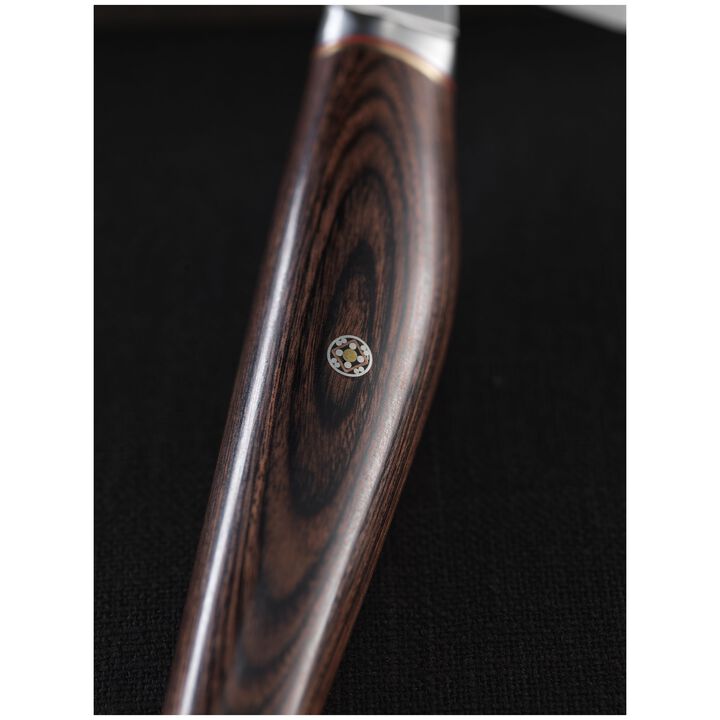
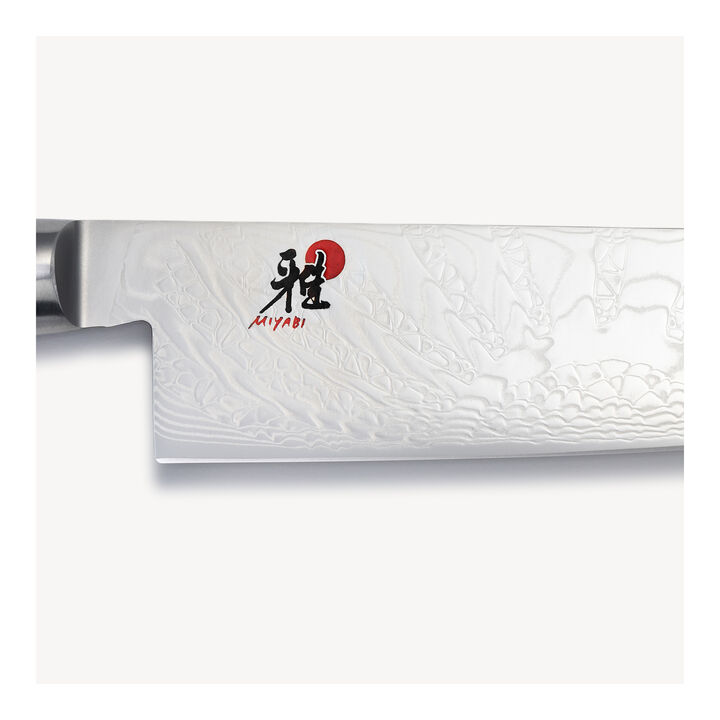
Whether a simple utility knife or a functional and aesthetic eye-catcher in your kitchen: with a Santoku knife, not only the preparation of Asian delicacies is fun. The Japanese knives of the brand MIYABI are designed by Japanese, manufactured in Japan in our factories, and captivate especially from the harmony of Asian aesthetics and highest quality. A classic Japanese cutting technique makes the blades particularly sharp and durable.
Always a good cut - Santoku knives are universally applicable
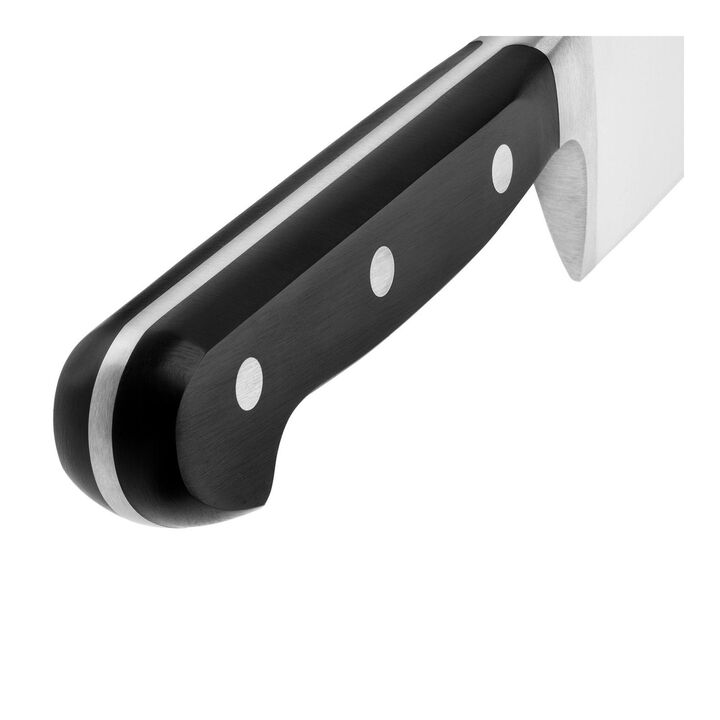
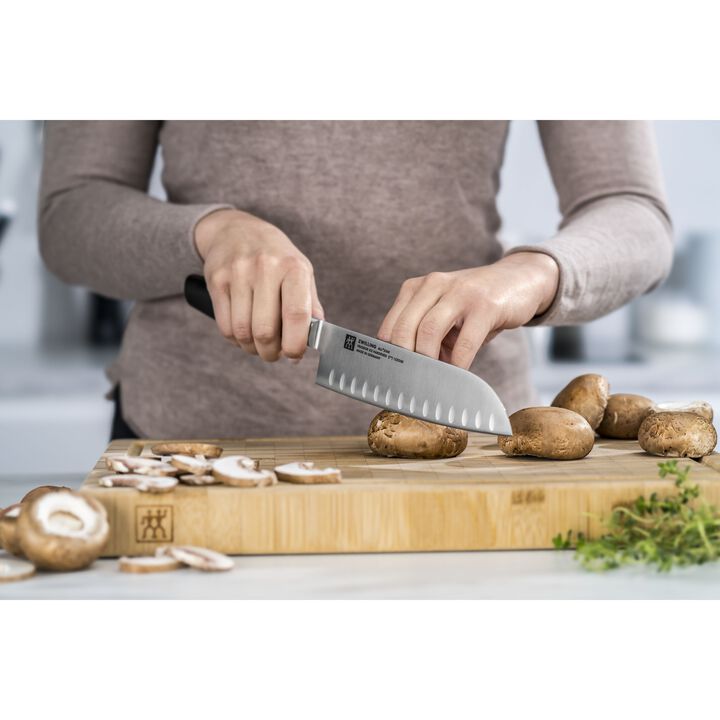
A ZWILLING Santoku knife is ideal for fast cutting. The characteristic shape of the knife ensures good guidance and offers optimum protection for the fingers. The blade is ground on both sides and the upper edge of the knife is blunt and forms a horizontal line to the handle. The blade of a Santoku knife is wide and protrudes below the handle. The knife lies securely balanced in the hand, the handle can be gripped securely and the fingers do not touch the surface when cutting, while the blade cuts the material with a deep, clean cut.
By the way: The Santoku knife is a rather new creation by Japanese cutlers, further development of the traditional Hocho knife, which adapts the blade shape of a carving and slicing knife. The increased consumption of meat in Japanese cuisine since the middle of the last century has led to new demands on the functionality of a kitchen knife.
What is a Santoku knife used for?
A Santoku knife is one of the more approachable Japanese blades for chefs who want to learn more about Japanese cooking knives. It is primarily designed for pressure cutting applications and with its western-inspired shape, it meets the habits of European cooks. With the versatile Santoku knife, you can get to grips with Japanese knives.
Compared to the classic chef's knife, the Santoku knife offers a distinct design and cutting experience that caters to different culinary preferences and techniques. While a traditional Western style chef's knife usually features a longer blade, typically around 8 to 10 inches, the Santoku knife is shorter, generally between 5 to 7 inches, making it more manageable for cooks with smaller hands or limited kitchen space. The Santoku blade is characterized by a flatter edge and a double bevel, which facilitates precise push-cutting motions and suits it better than a rocking chop associated with chef's knives. Additionally, the Santoku often features a granton edge or dimples that create air pockets to prevent food from sticking to the blade, enhancing efficiency during food preparation. Its blade angle is typically shallower, around 10 to 12 degrees, compared to the 15 to 20 degrees of Western chef's knives, contributing to a sharper edge that excels in delicate slicing tasks and fine mincing of herbs, with a less pronounced tip than the more pointed chef's knife profile. A Santoku can also cut meat, including cooked meat, but it is not meant to go through bones.
A paring knife complements a Santoku for tasks that need a fine, pointed tip.
How do you maintain a Santoku knife?
Maintaining a Santoku knife properly ensures its durability and sharpness over time. Always hand wash the knife with mild soap and water, then dry it immediately with a soft towel to prevent rust and corrosion. Avoid using a dishwasher as the harsh detergents and heat can damage the blade and handle. To keep the blade sharp, use a whetstone to sharpen your Santoku knife regularly, ideally at an angle of 10 to 15 degrees. Proper storage in a wooden block or sheath helps protect the blade and maintain its edge. With these simple steps, your Santoku knife will remain a good knife for all your kitchen tasks.
All ZWILLING Santoku knives are made of high-quality stainless steel.
Attention is paid to the optimum balance between the chromium and carbon content of the material, which optimizes the material properties: The steel is cooled from temperatures of 1,000°C in several rapid steps to room temperature and then to low temperature. These rapid temperature changes alter the material properties of the steel: the blades are hardened and thus resistant to wear and corrosion.
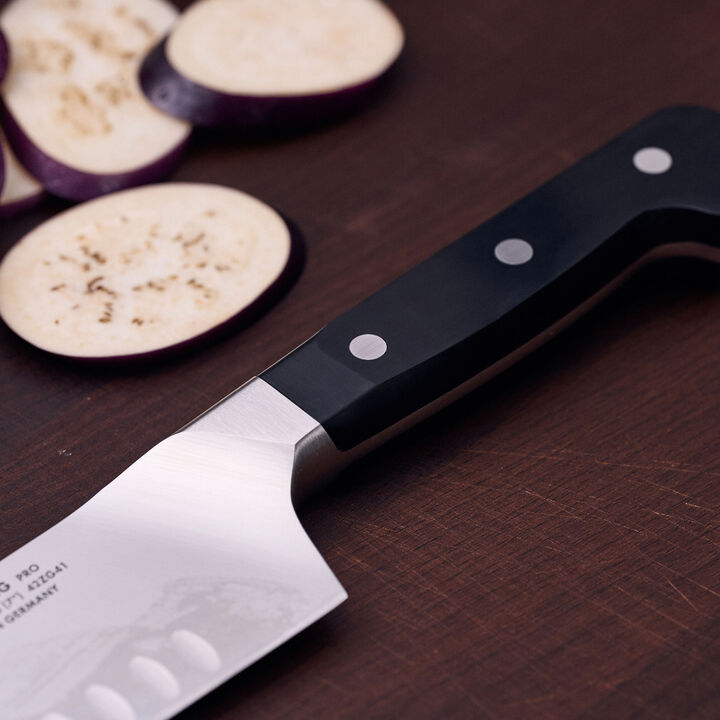
In the kitchen world of ZWILLING, you will find a large selection of high-quality Santoku knives. Choose the appropriate blade length and your preferred handle material. Whether you choose the classic ZWILLING design, a Japanese model with a Damascus blade, or a knife with or without hollows: You always choose a high-quality product, made for the demands of hobby cooks and professionals.


