


Serrated Knives
Discover the precision and durability of ZWILLING serrated knives, expertly crafted to handle a variety of kitchen tasks with ease. Designed with high carbon stainless steel blades, these knives offer exceptional sharpness and long-lasting performance, perfect for cutting tomatoes, slicing bread, and achieving clean slices every time. Whether you're preparing crusty loaves, delicate fruits, or layered cakes in a home kitchen or the professional setting, these knives provide the perfect balance of strength and finesse and combine innovative design with superior craftsmanship.
FAQ
A serrated knife is a versatile kitchen tool designed with a saw-like edge that excels at cutting through foods with tough exteriors and soft interiors. Its unique blade structure allows it to slice cleanly without crushing or tearing delicate textures, making it indispensable for a variety of cutting tasks. However, a serrated knife is not suitable for tasks requiring precise, clean cuts, such as filleting fish or finely dicing vegetables.
Recommended for:
- Bread and rolls, including crusty loaves
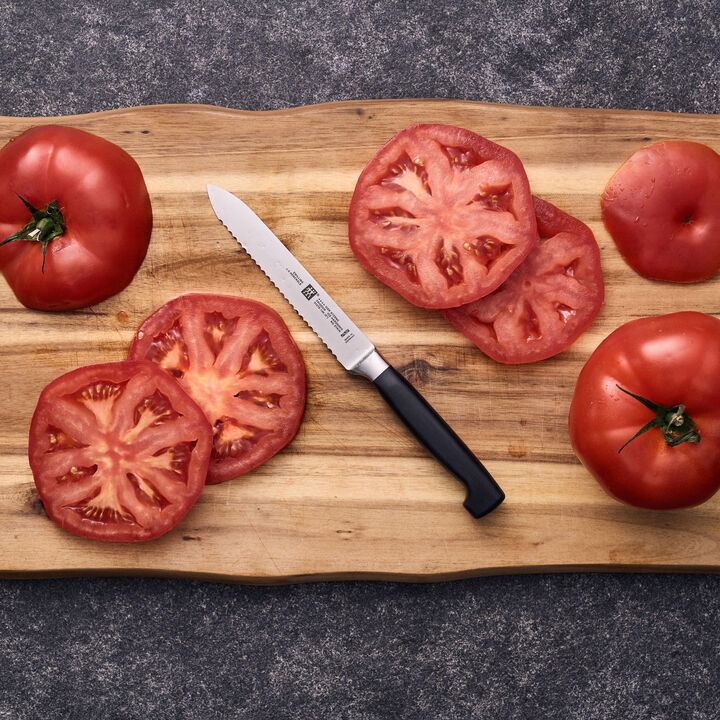
- Tomatoes and other soft vegetables with firm skins
- Citrus fruits, such as oranges, lemons, and limes
- Cakes with firm or crusted edges
- Roasts with crisp exteriors
- Pineapple, melons, and other thick-skinned fruits
Not recommended for:
- Filleting or carving raw meat
- Preparing delicate fish or sushi
- Chopping herbs, as the serrated edge may tear rather than slice
- Soft, rindless cheeses, which may cling to the blade
While most ZWILLING knives are dishwasher-safe, it is recommended to handwash our serrated knives to maintain their edges for longer. To clean one, always wash it by hand using warm water and mild detergent. Using a dishwasher may dull the blade more quickly due to the high heat and harsh detergents. Use a soft sponge or cloth to gently clean between the jagged edges, then rinse thoroughly. Dry the knife immediately with a clean towel to prevent rust and water spots.
Sharpening a serrated knife requires specialized tools like tapered sharpening rods designed to fit each serration. Sharpen each individual serration carefully by honing the beveled edge while maintaining the original angle, and hold the surface of the serrated knife flat when deburring after sharpening. Because of the blade’s jagged edges and pointy teeth, this process is more time-consuming and challenging than sharpening straight-edged knives. Many users prefer professional sharpening services to keep their serrated knives performing optimally.

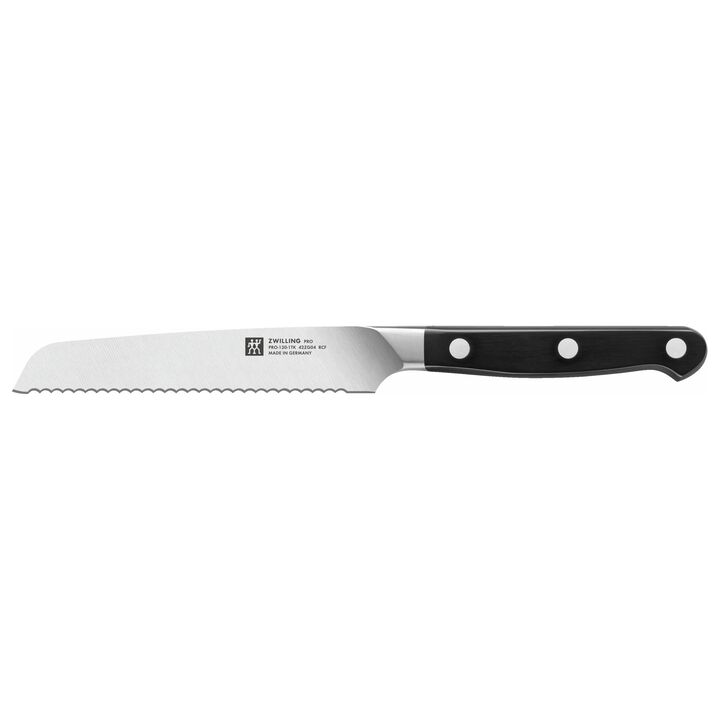
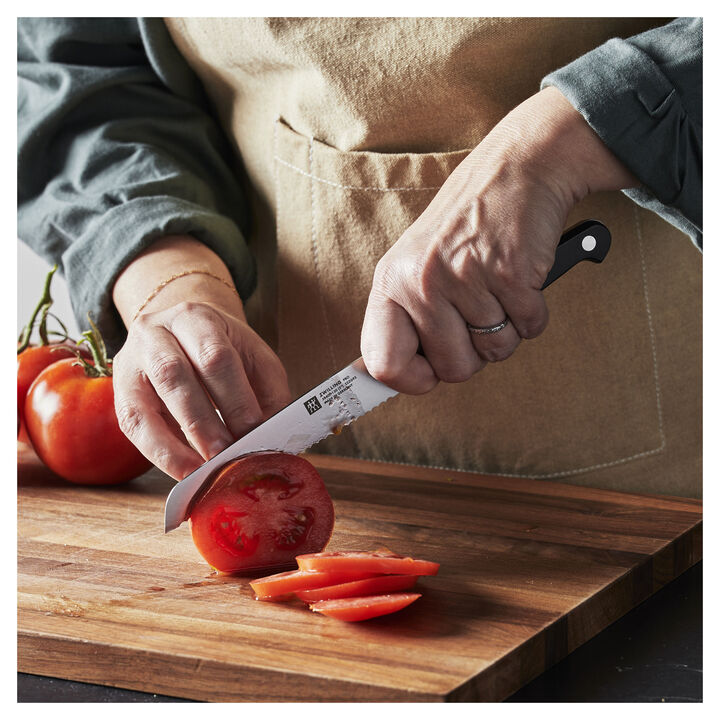
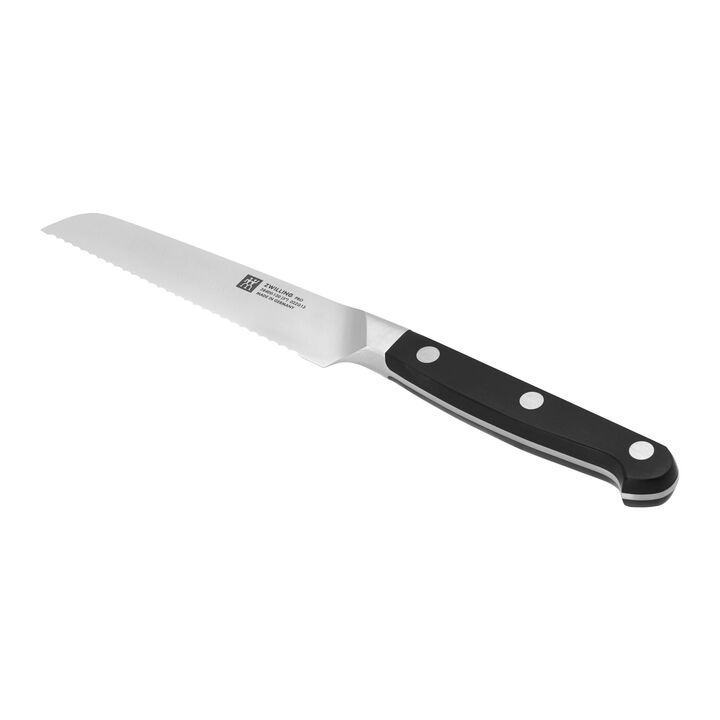
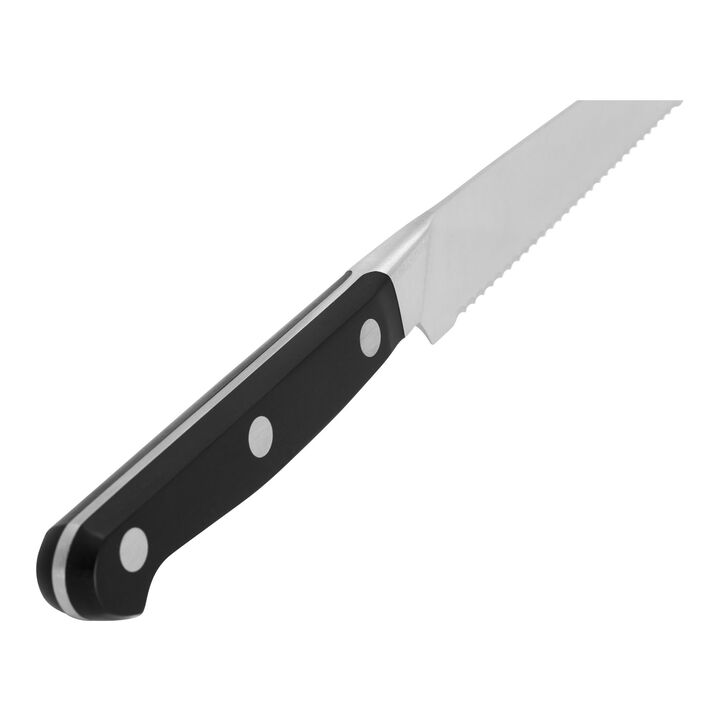


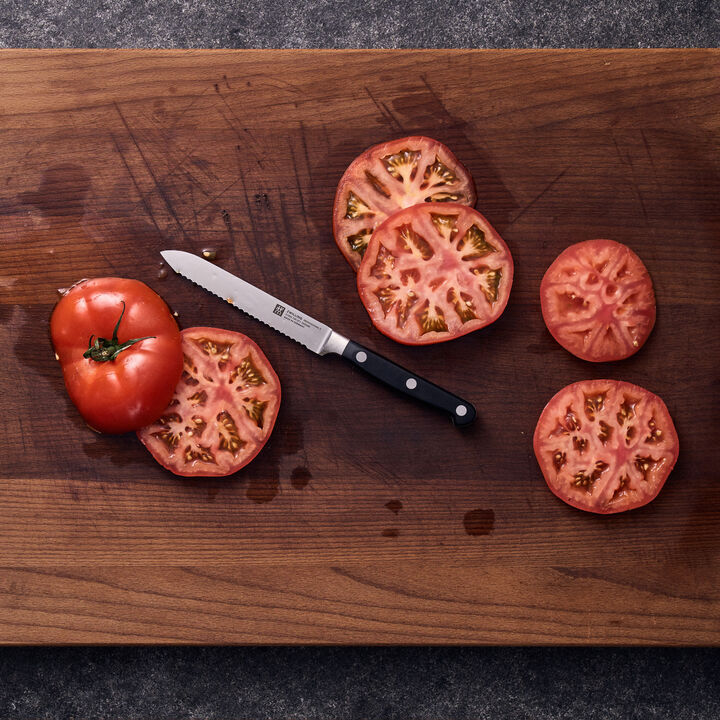
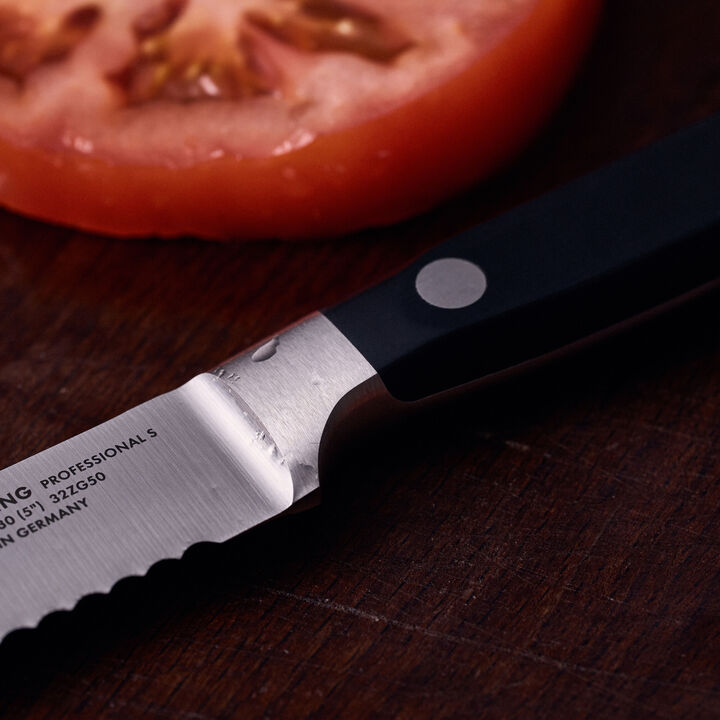
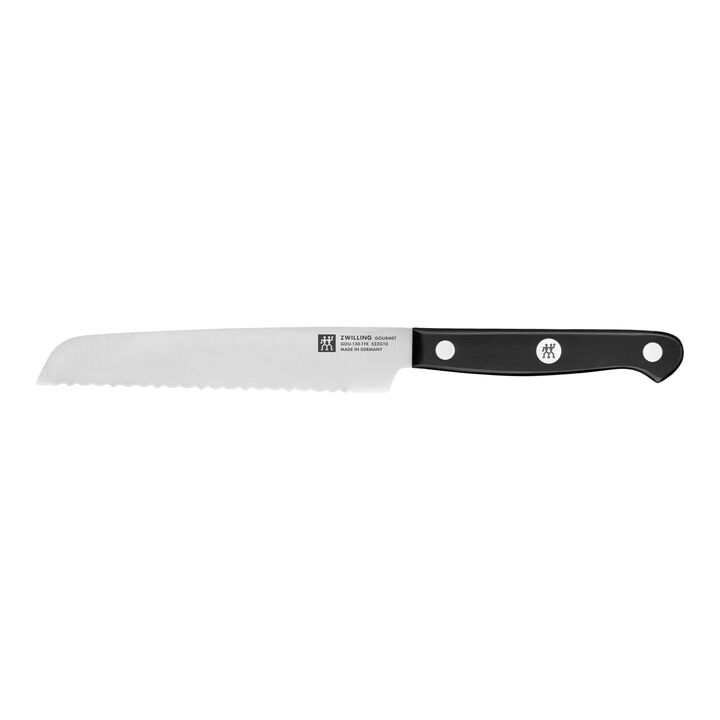


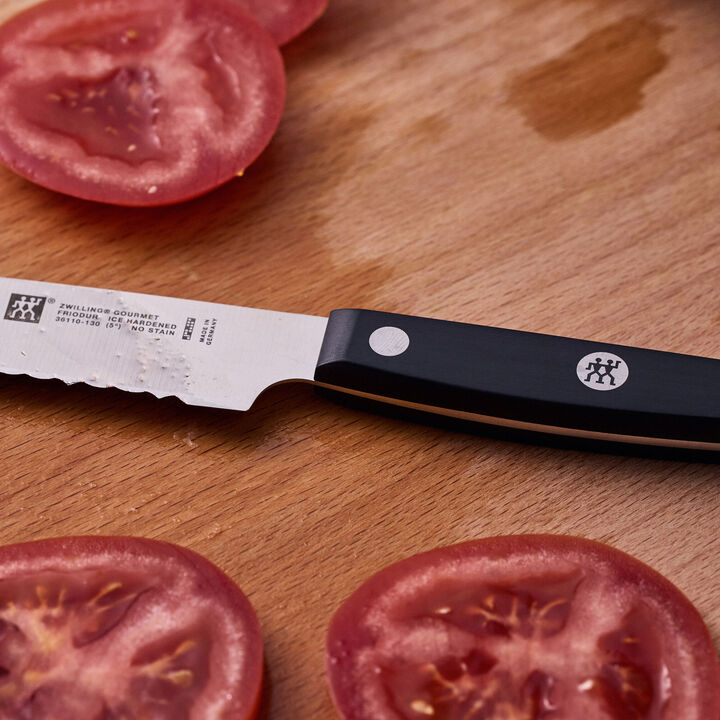
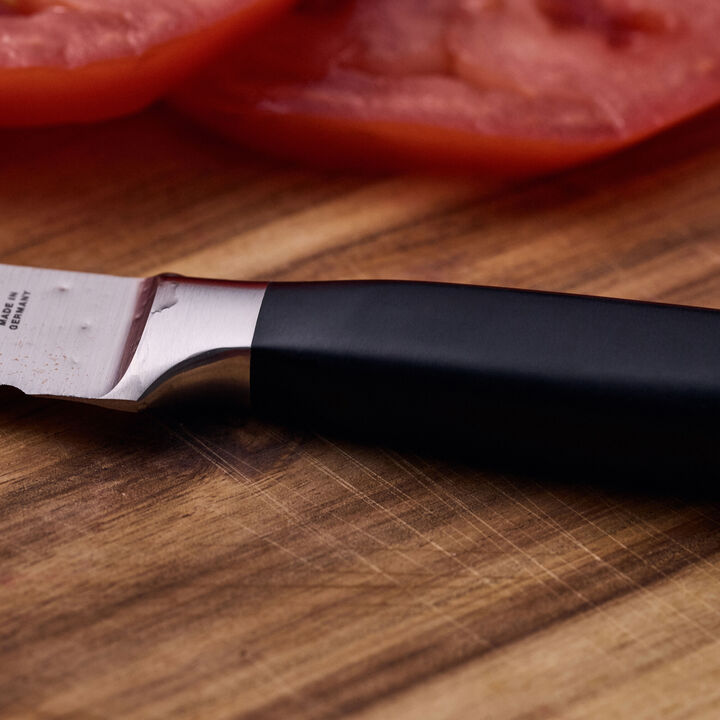
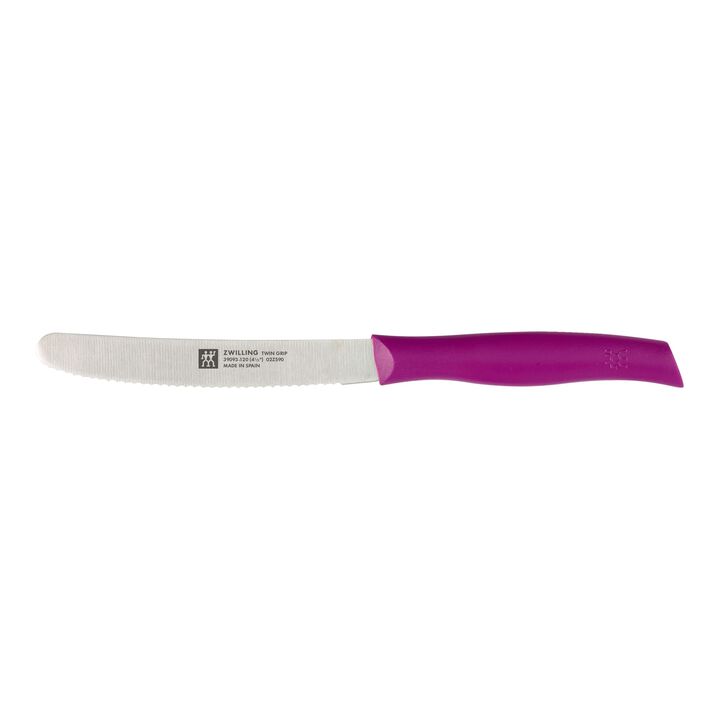


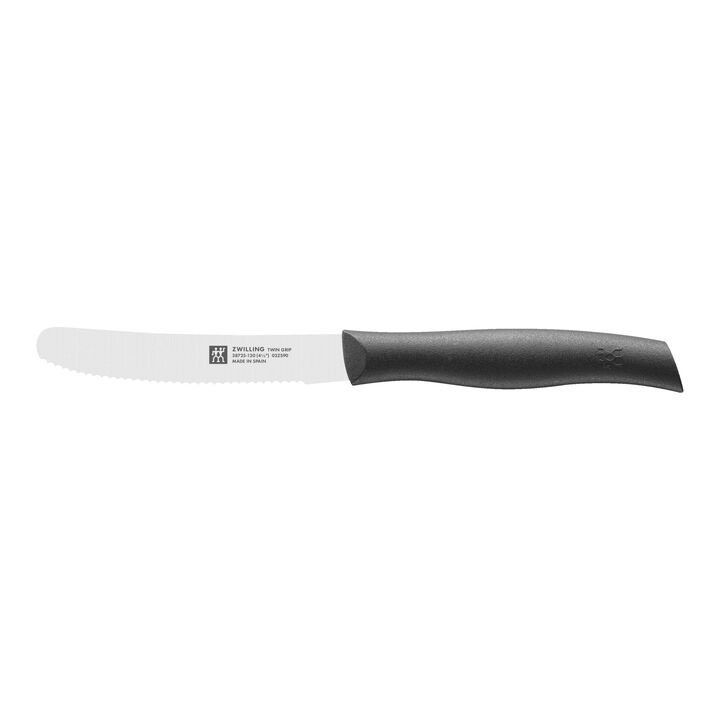
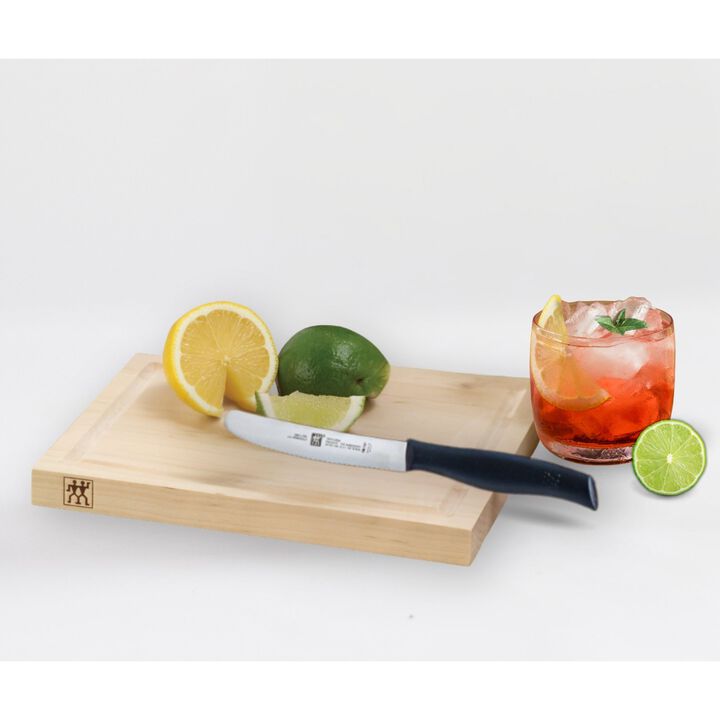



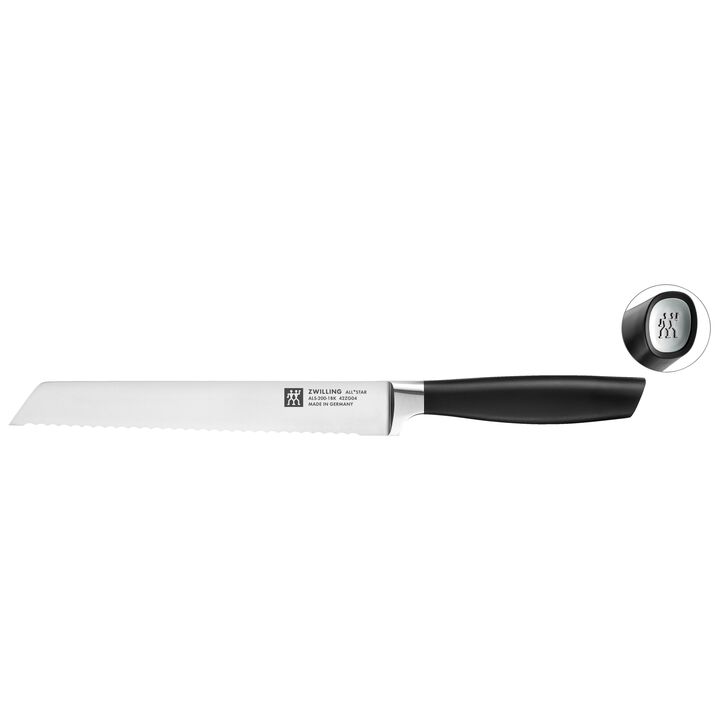
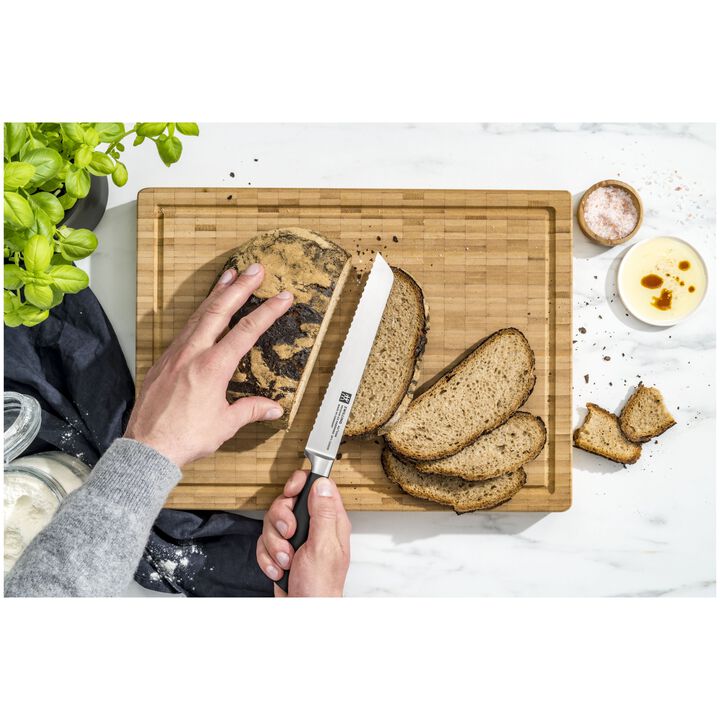
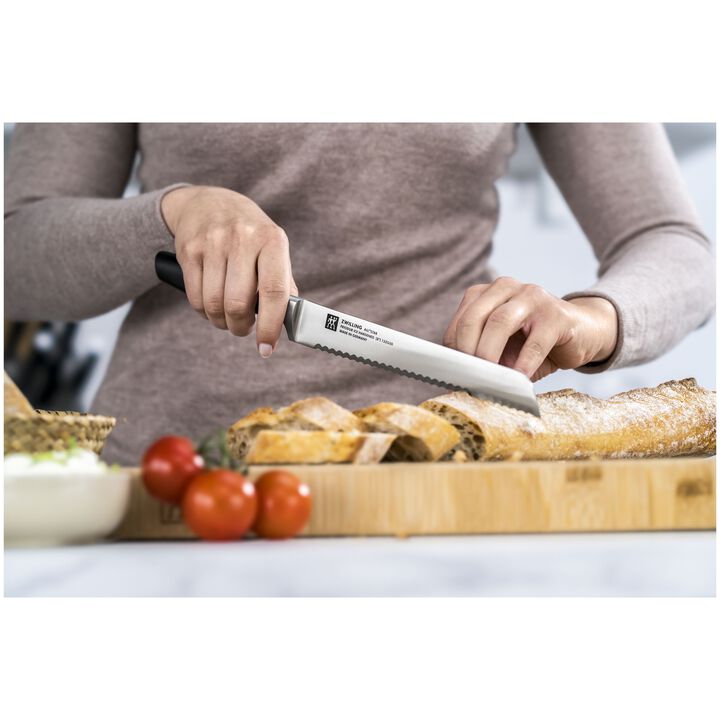



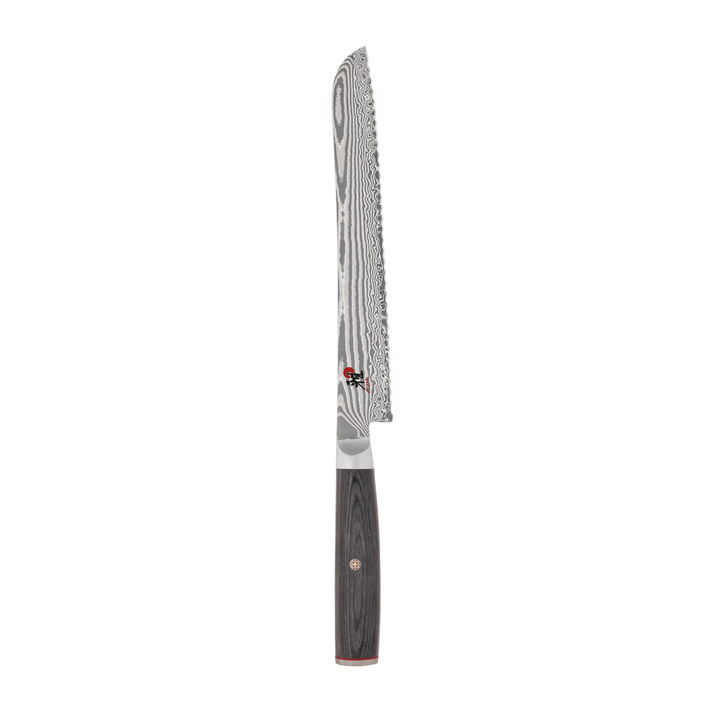
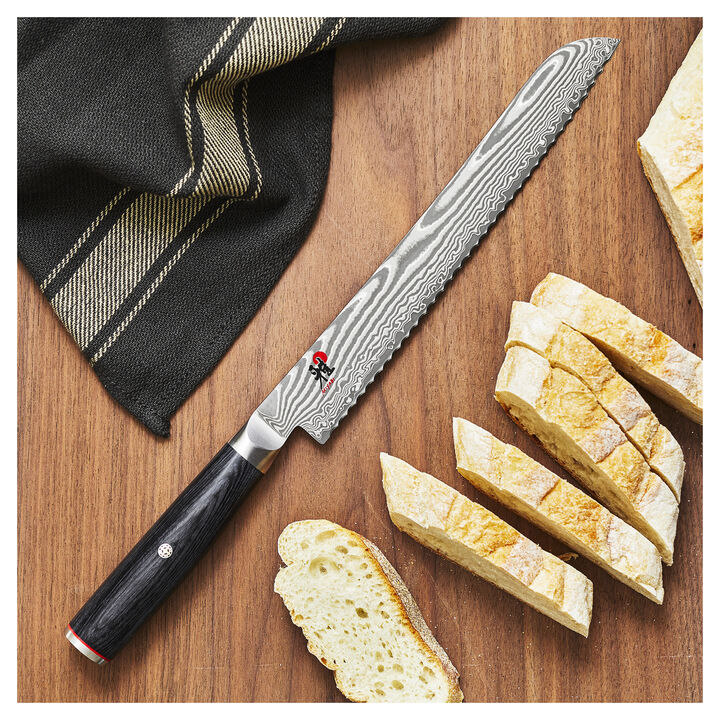
Serrated Knives – Precision for Crusty Exteriors and Delicate Interiors
A serrated knife like a bread knife or a utility knife is a staple in any well-equipped kitchen. Whether you're slicing through crusty artisan loaves, soft bread, juicy tomatoes, or fruits with thick skins and soft centres, this blade is designed for effortless, clean cuts. Discover how serrated knives work, how they're crafted, their benefits, proper care and explore premium-quality serrated knives by ZWILLING.
What Is a Serrated Knife Edge?
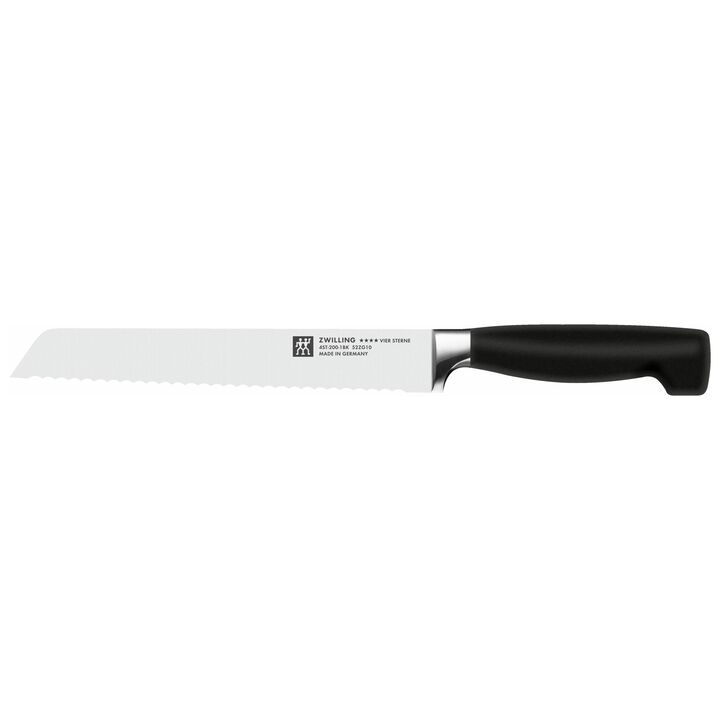
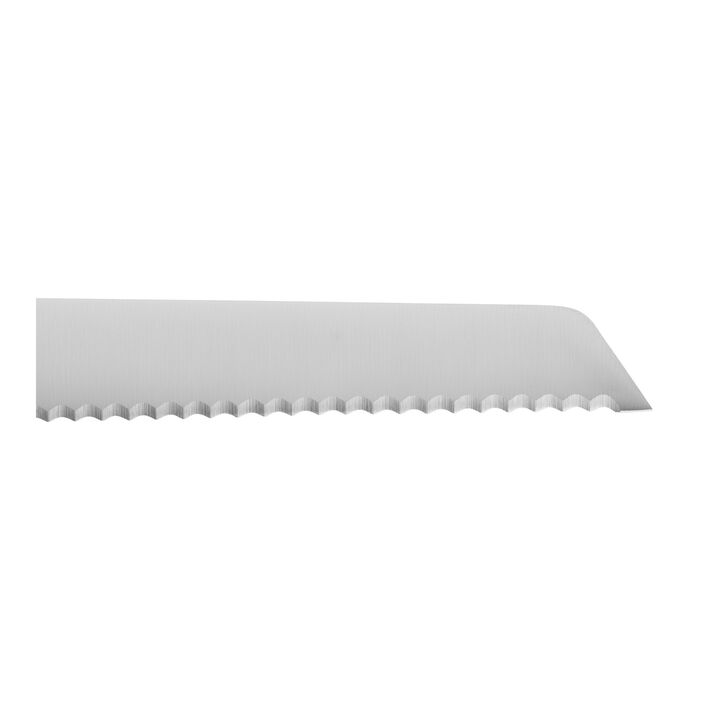
A serrated edge features a distinctive, wave-like blade shape with alternating teeth (peaks) and grooves (valleys) along the cutting edge. This design allows the blade to saw through tougher surfaces with minimal pressure – ideal for foods that are firm on the outside and soft on the inside. From cooked meats to hard crusts, a serrated utility knife or bread knife cuts cleanly.
How Does a Serrated Knife Work?
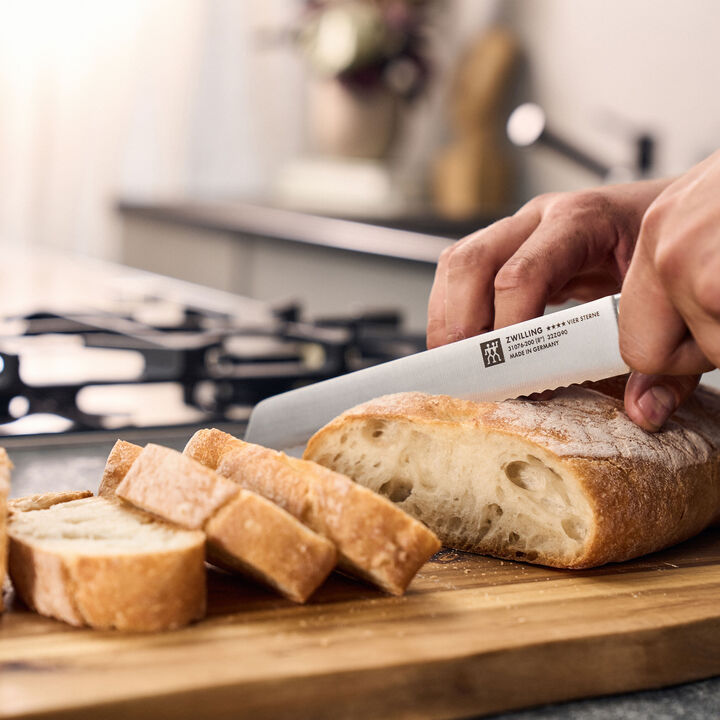
The toothed design of a serrated knife grips the surface of crusty or slippery foods, slicing through without crushing them. The peaks pierce the exterior while the valleys reduce drag and distribute pressure, resulting in precise, clean cuts with a gentle sawing motion.
Advantages and Disadvantages of Serrated Knives
Advantages:
- Ideal for crusty or skinned foods: Perfect for bread, tomatoes, citrus, or roasts with a crisp exterior
- Long-lasting sharpness: The serrated edge stays sharp significantly longer than straight-edged blades
- Gentle on delicate foods: Avoids squishing soft interiors
- Reduces cutting effort: The sawing motion makes slicing easier
Disadvantages:
- More difficult to sharpen: Requires professional tools or sharpening expertise
- Less versatile: Not suitable for precision tasks like filleting or dicing
Types of Serrated Knives
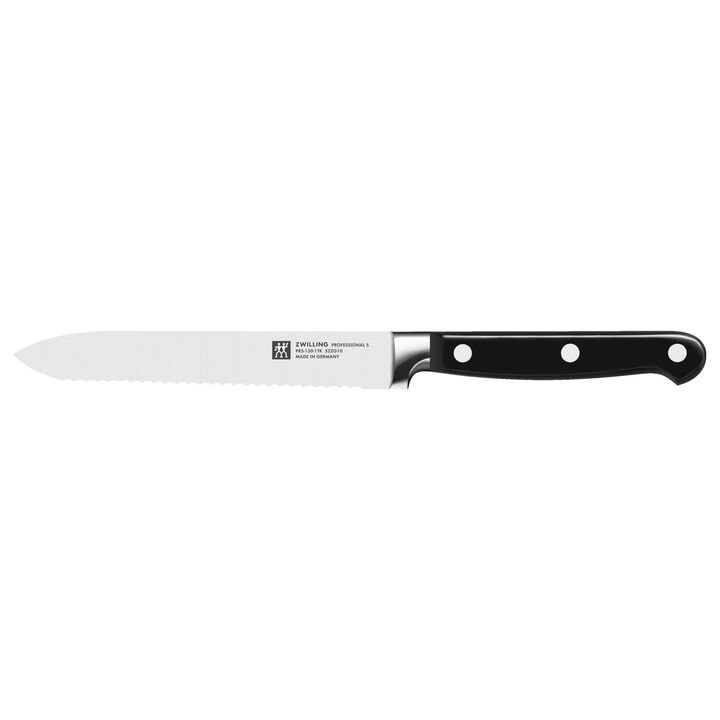
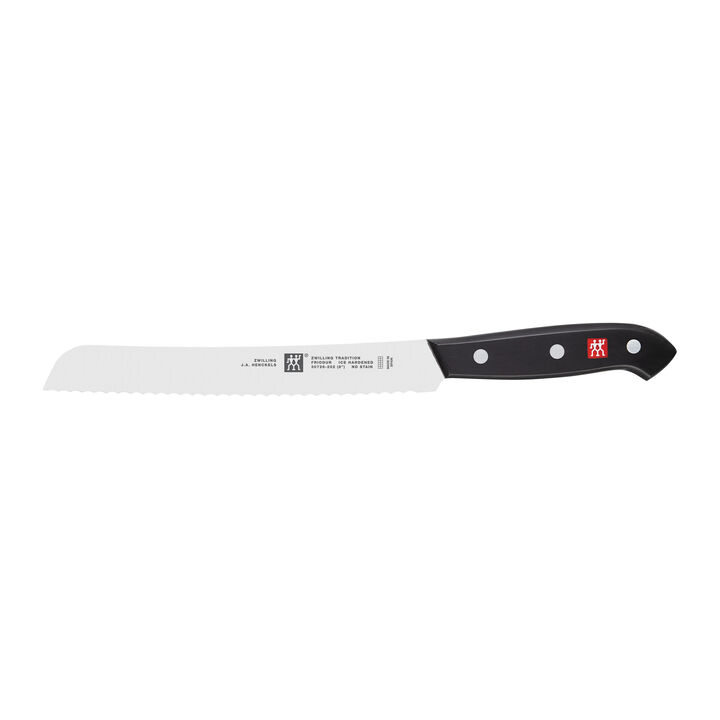
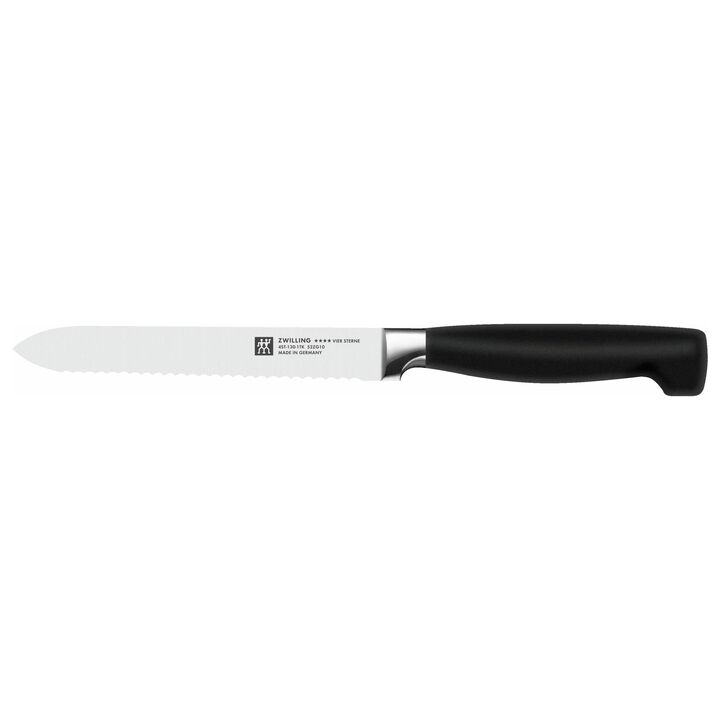
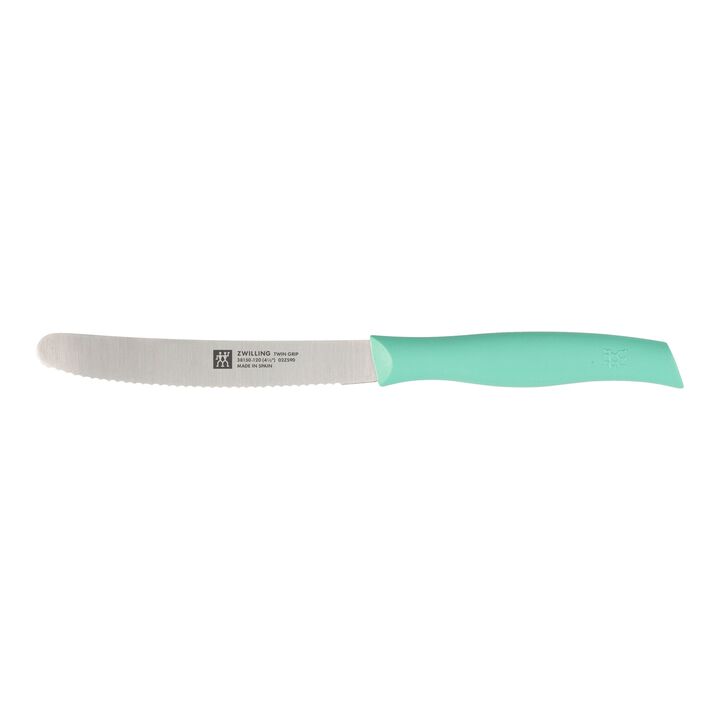
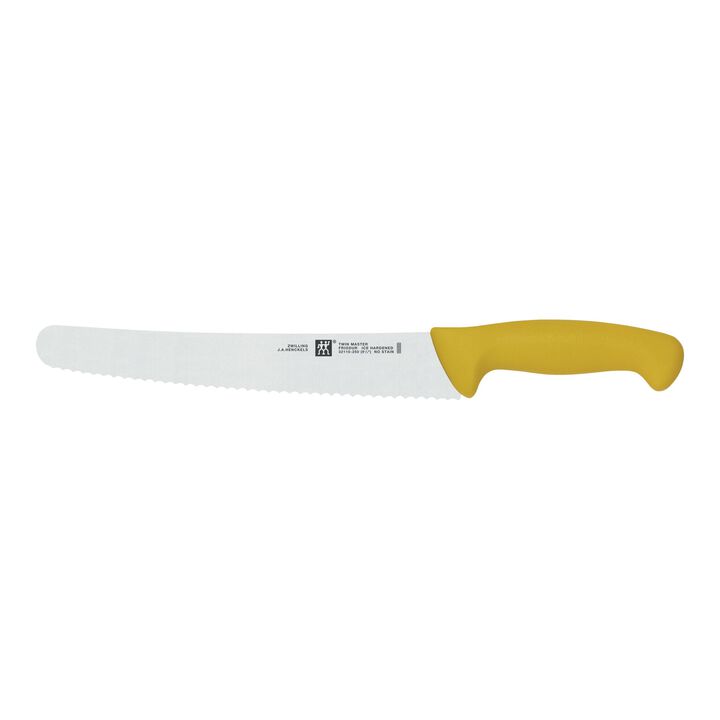
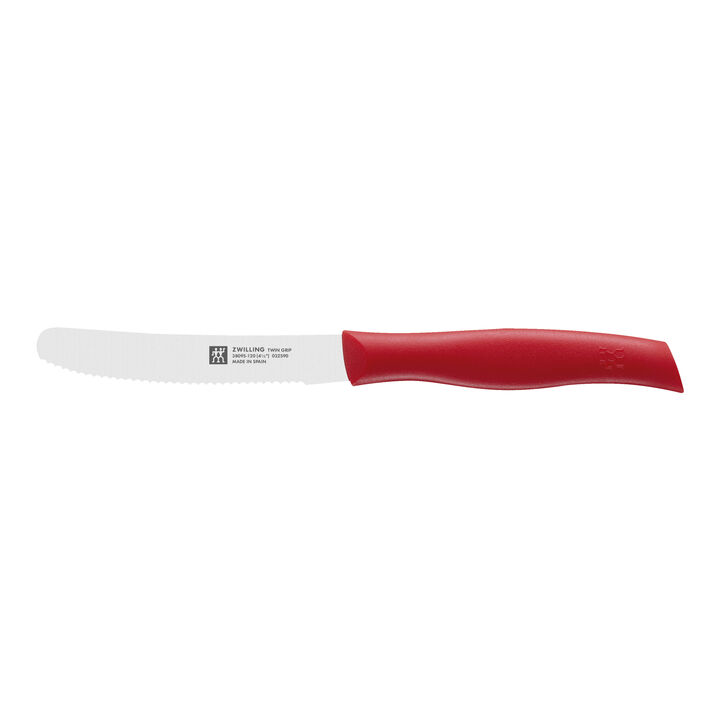
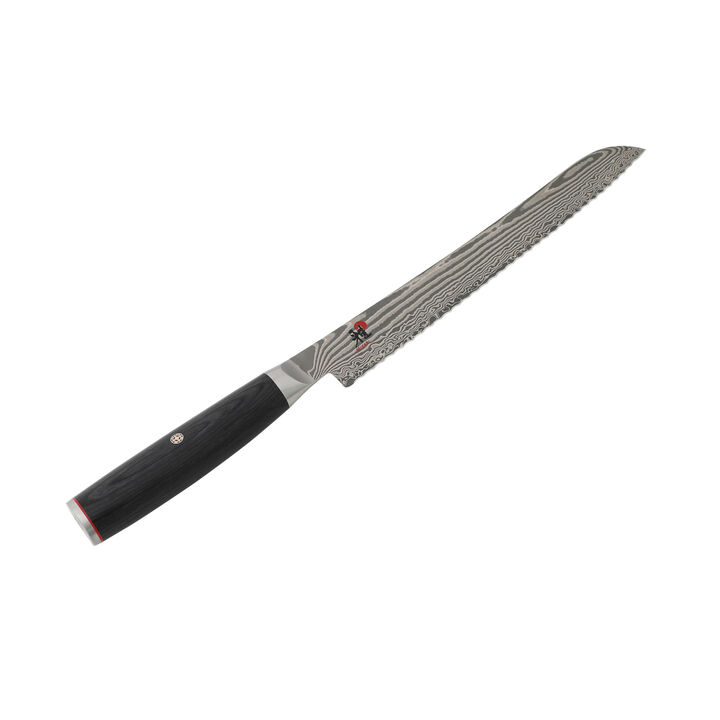
There are different types of serrated knives designed to handle various cutting tasks in the kitchen, with utility knives and bread knives being the most common. Utility serrated knives typically feature blades that are 4 to 6 inches long, making them versatile and easy to maneuver for precise work. These knives are perfect for slicing tomatoes, cutting sandwiches, or handling smaller fruits and vegetables where clean, thin slices are desired without crushing the delicate interiors. Their serrated edges provide excellent grip and control, allowing home cooks to achieve neat cuts on slippery or soft-skinned produce.
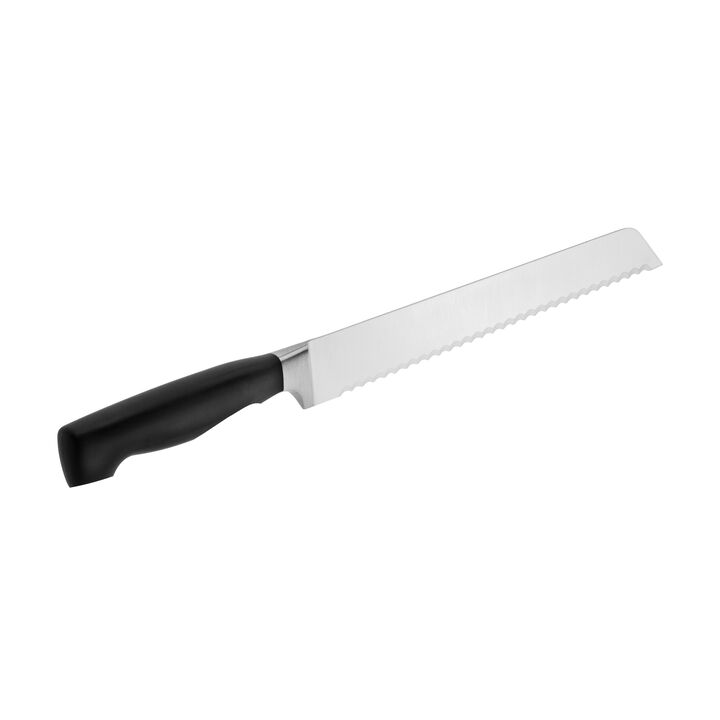
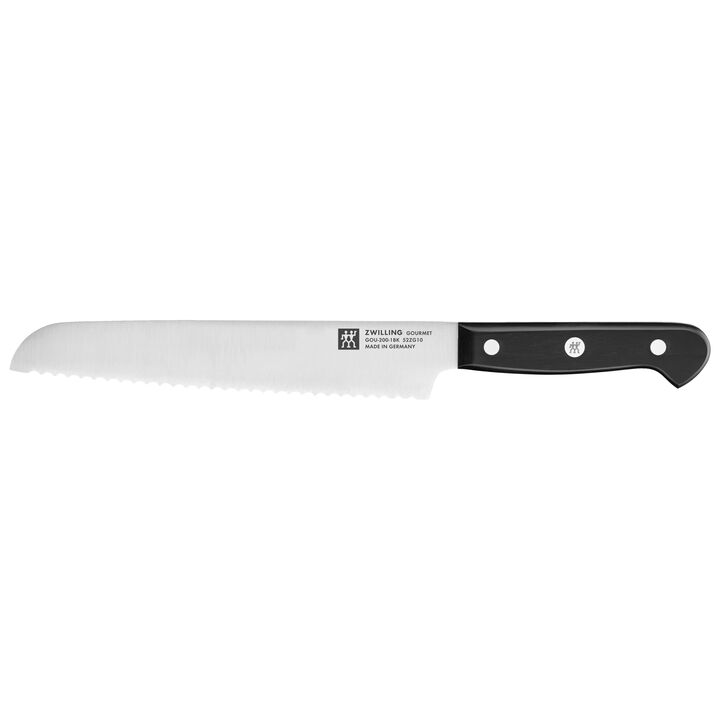
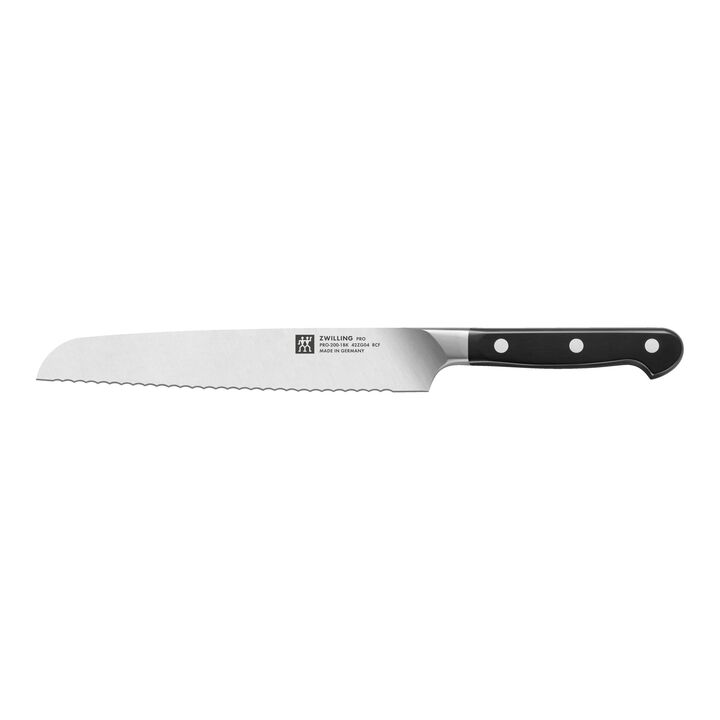
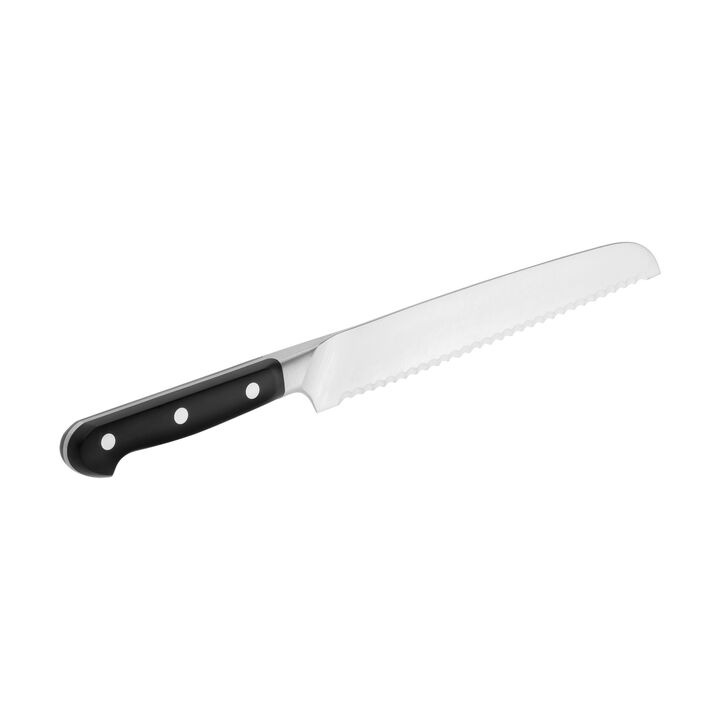
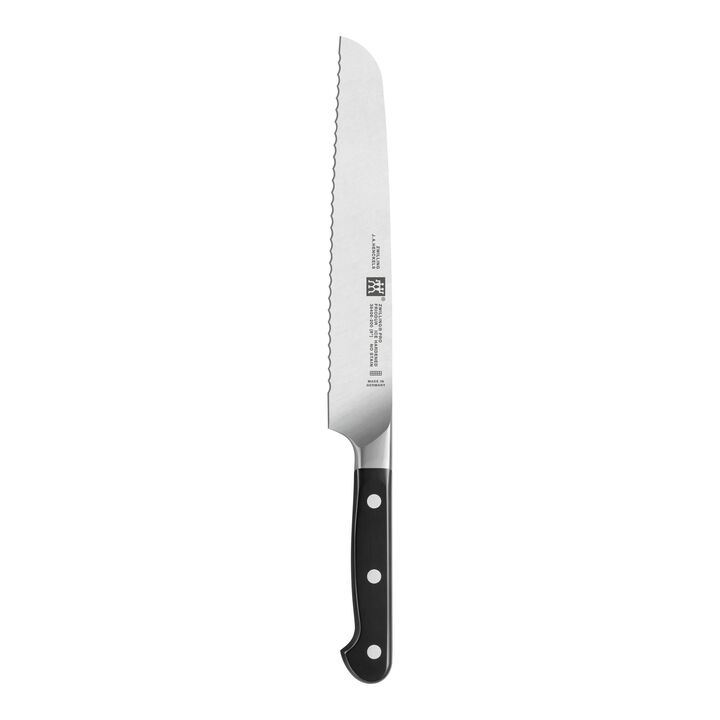
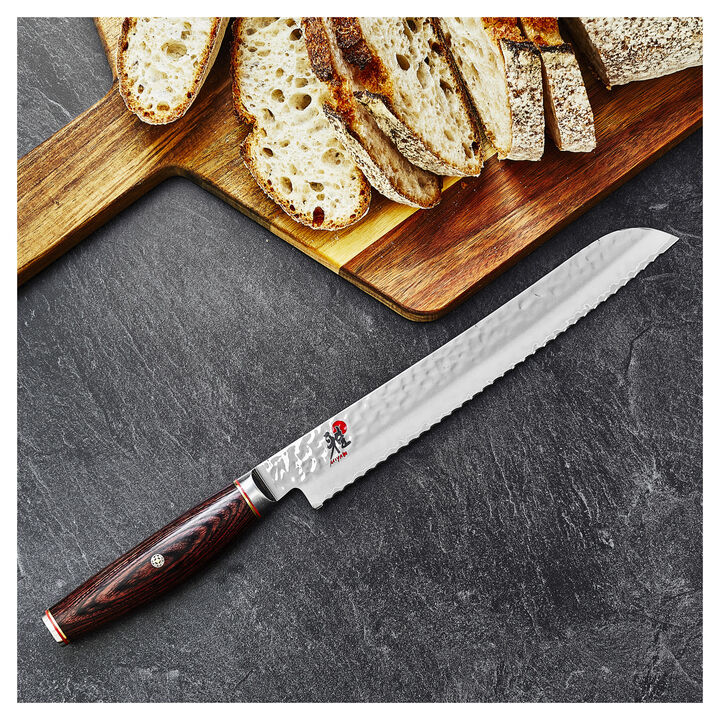
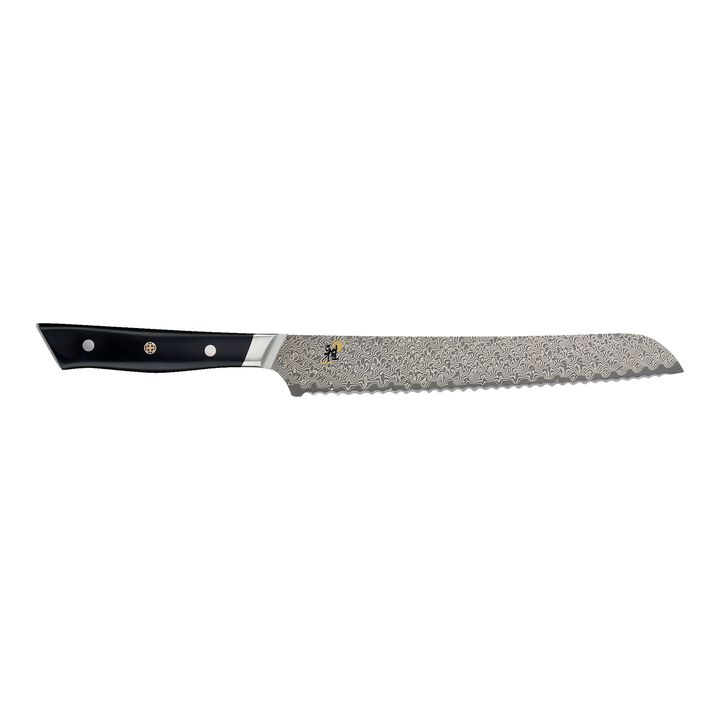
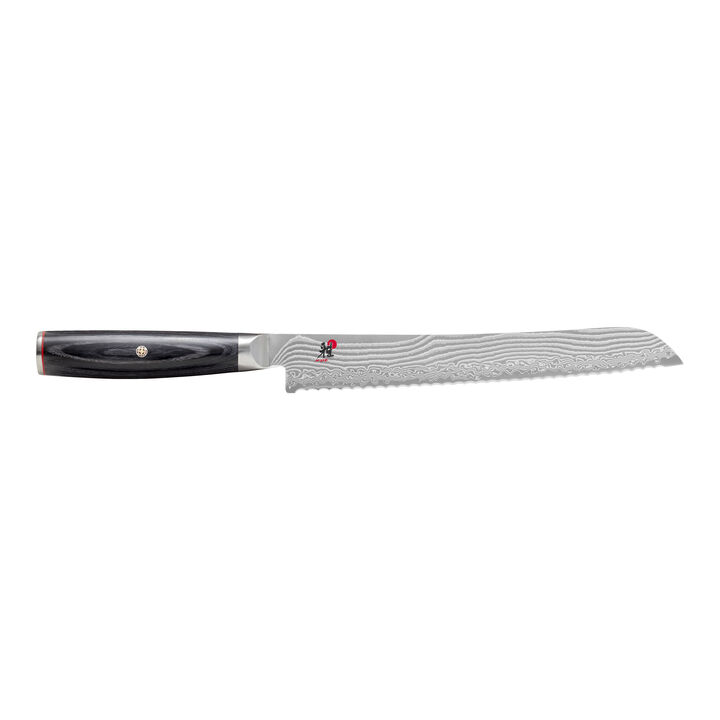
On the other hand, bread knives are specialized serrated knives with longer blades, usually ranging from 8 to 11 inches, designed specifically for cutting through crusty loaves and baked goods. The length of the blade allows for smooth, even slicing across larger surfaces, often in a single stroke, preserving the bread’s structure without squashing the soft interior. Bread knives often have moderate serrations with either sharp, pointy teeth or rounded scallops to balance bite and smoothness, making them ideal for cutting different types of bread, from artisanal crusty boules to soft sandwich loaves. Some bread knives also feature an offset design, where the blade sits below the handle to provide better leverage and keep fingers clear of the cutting surface.
How to Use and Care for a Serrated Knife
Usage Tips:
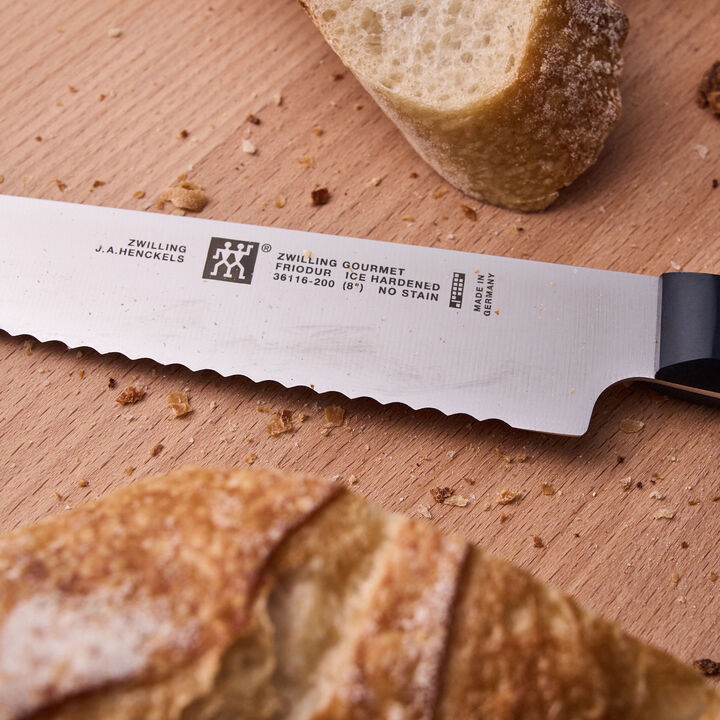
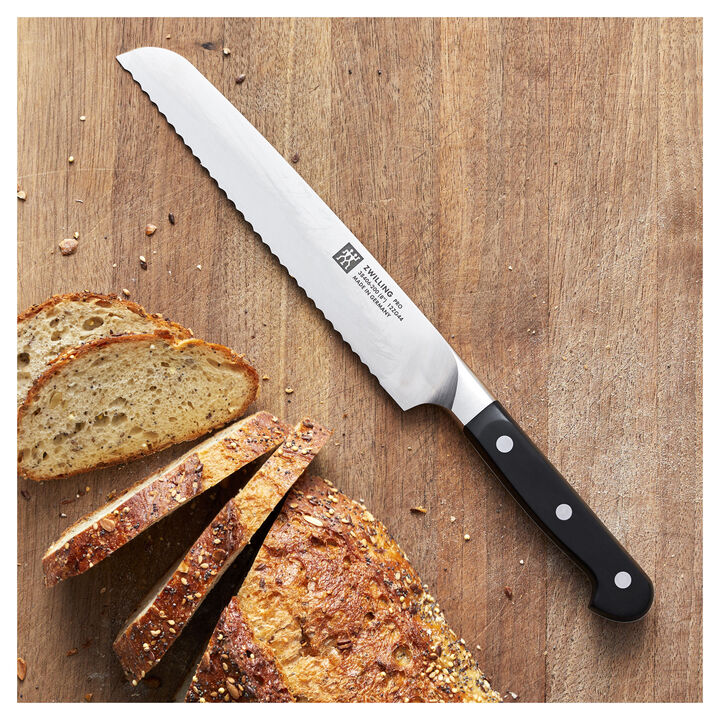
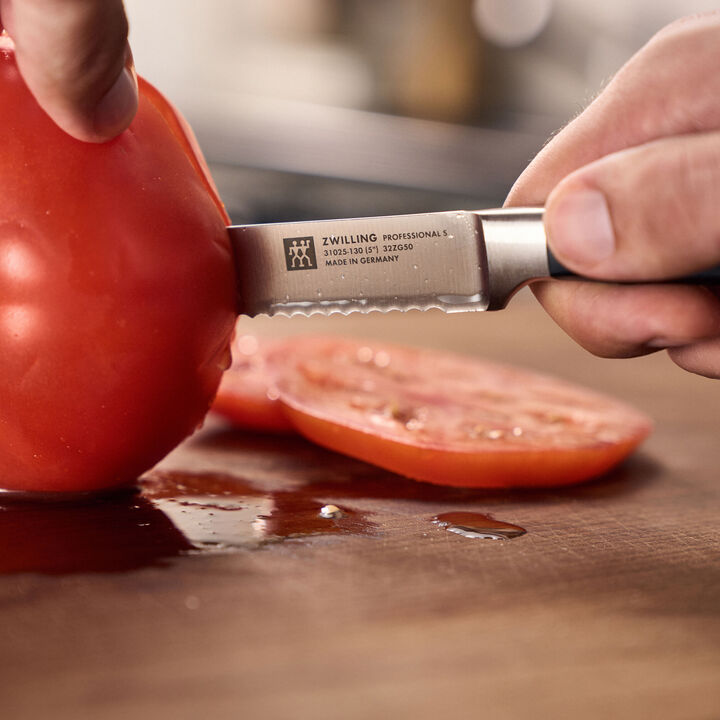
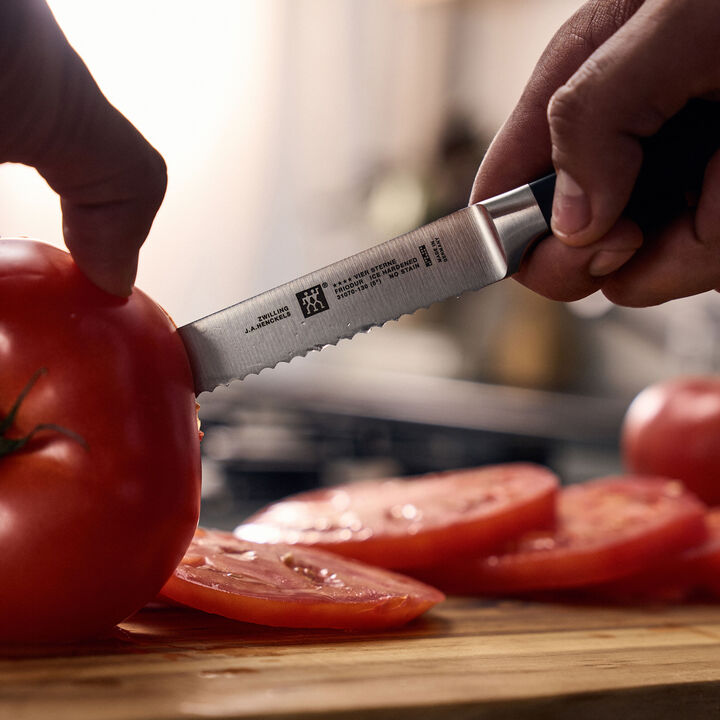
Use a gentle sawing motion when cutting – don't push straight down like you would with a chef's knife. Serrated knives are ideal for bread, fruits with skins, or roasts with crusts. For meat, fish, or vegetables, choose a straight-edge blade like a chef's or Santoku knife. When slicing bread, use long, smooth strokes to cut through the crust without crushing the soft interior, ideally cutting bread in a single stroke. For delicate tomato skins and other soft fruits, apply minimal pressure and let the serrations grip and slice cleanly to achieve uniform slices without squashing.
Always use a stable cutting board, preferably wood or plastic, to protect both the knife edge and your work surface. Avoid cutting on hard surfaces like glass or stone, which can dull the serrations quickly. When handling the knife, hold it firmly but comfortably to maintain control and prevent slipping. For tougher tasks, such as peeling butternut squash or slicing citrus, use the tip or shorter blade section to maneuver precisely. Regularly inspect the serrations for any damage and avoid twisting or prying motions that could harm the blade.
Care Tips:
To keep your serrated knife in top shape for years to come, follow these care recommendations:
- Hand-wash recommended: While many knives are labelled dishwasher-safe, the high heat and strong detergents may damage the blade or edge over time. Wash gently by hand using warm water and a soft cloth. Take special care with wooden-handled knives.
- Dry immediately: Prevent water spots or rust by drying your knife thoroughly after washing.
- Store safely: Use a wooden knife block, magnetic knife bar, or knife bag to protect the blade and avoid dulling. ZWILLING offers empty knife blocks and knife storage accessories for your perusal.
- Use for intended purposes only: Avoid using the knife for prying, opening cans, or cutting on hard surfaces such as glass or stone, as this can damage the serrations.
- Good habits go a long way: With the right care, your serrated knife will offer exceptional performance for years.
Serrated vs. Straight-Edge – A Side-by-Side Comparison
| Cutting Motion | Sawing | Rocking or pressing |
| Best Uses | Bread, tomatoes, fruits, crusted meats | Vegetables, meat, fish, herbs |
| Ease of Sharpening | Requires professional tools | Easy with honing steel or whetstone |
| Edge Retention | Very high | Moderate to high |
Final Thoughts on Serrated Kitchen Knives
While a serrated knife isn't an all-purpose kitchen tool, it's absolutely essential for specific slicing jobs. If you often cut bread, tomatoes, or crusted meats, you'll appreciate the efficiency and long-lasting sharpness of a well-made serrated blade. Choose a ZWILLING or MIYABI knife for craftsmanship you can trust.
Want to find more? Feel free to examine our knife set options or check out what ZWILLING items are currently on sale.


